An all-in-one open-source Internet of Things (IoT) smart agriculture development kit designed for students, makers, and indoor gardening enthusiasts. Powered by the high-performance ESP32 Wi-Fi + Bluetooth microcontroller, this comprehensive kit allows you to build an automated drip-irrigation ecosystem. It tracks soil moisture, ambient temperature, humidity, and water temperature in real-time, engaging a heavy-duty mini water pump automatically to keep plants healthy while pushing data logs directly to your smartphone or cloud dashboard.
Component List:-
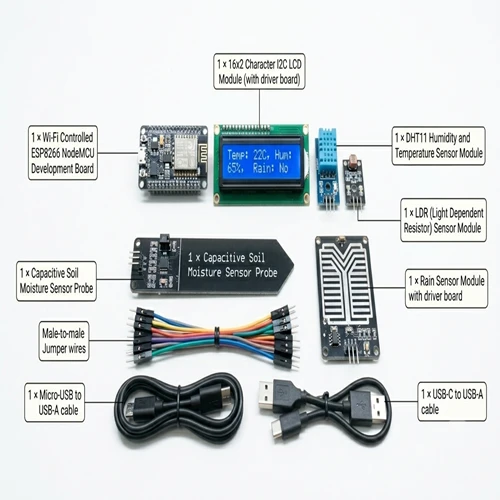
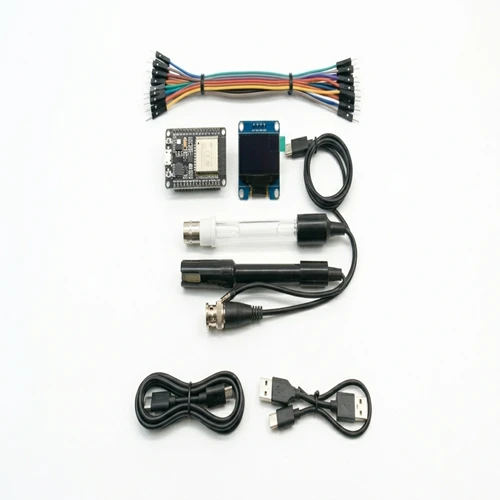
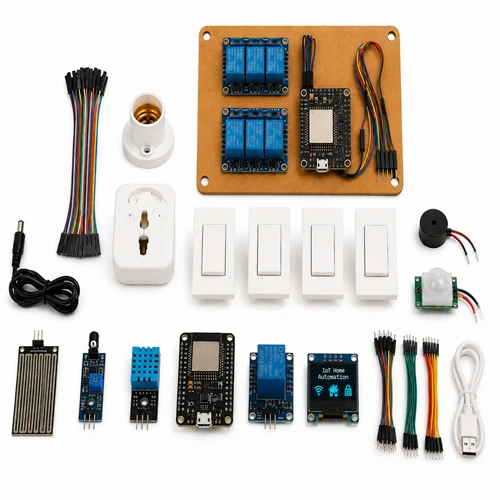
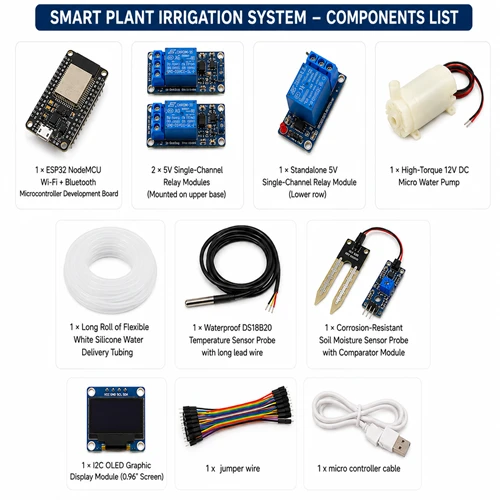
- ESP32 NodeMCU Wi-Fi + Bluetooth Development Board – 1 Pc
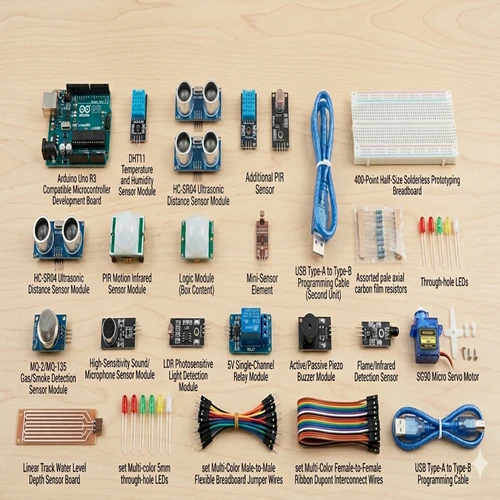
- 5V Single Channel Relay Module – 3 Pcs
- 12V DC Mini Water Pump – 1 Pc
- Flexible Silicone Water Tube – 1 Roll
- DS18B20 Waterproof Temperature Sensor Probe – 1 Pc
- Soil Moisture Sensor Module with Probe – 1 Set
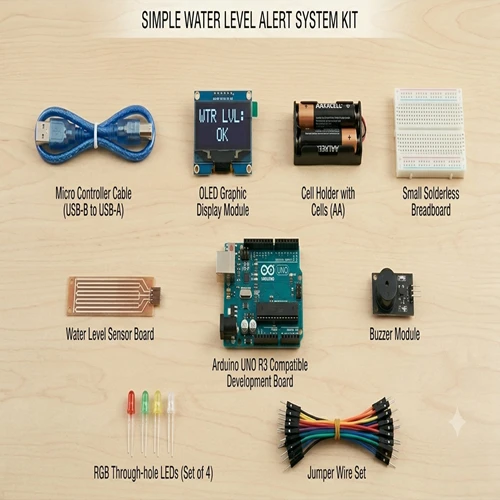
- 0.96" I2C OLED Display Module – 1 Pc
- Jumper Wire Set (Male-Female / Male-Male) – 1 Pack
- Micro USB Programming Cable – 1 Pc
Features:-
- Smart Wi-Fi Irrigation Node: Centered around a powerful ESP32 NodeMCU microcontroller, enabling real-time remote monitoring and over-the-air firmware updates via local Wi-Fi.
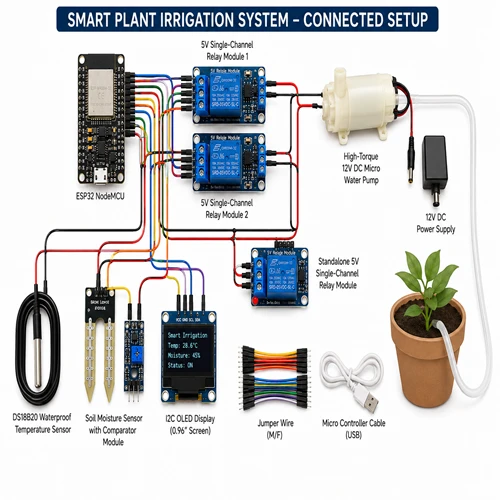
- Automated Pump Shifting: Utilizes dual onboard 5V relays and a standalone relay module to toggle a high-efficiency 12V micro water pump safely without manual intervention.
- Dual Soil & Fluid Diagnosis: Equipped with an analog soil moisture probe to measure root hydration alongside a waterproof DS18B20 sensor for tracking reservoir or soil temperature.
- Micro-Climate Tracking: Includes a DHT11 sensor to monitor surrounding air temperature and humidity levels, helping you optimize overall greenhouse settings.
- Dynamic Graphical Telemetry: Features a sharp I2C OLED graphic display pre-programmed to show current moisture percentages, localized temperature readings, and active pump status indicators.
Applications:-
- Building a remote smartphone-controlled garden node via Blynk, ThingSpeak, or Home Assistant.
- Hands-on academic STEM workshops focused on automated agriculture, fluid mechanics, and sensory logic.
- Creating desktop smart greenhouses, automated indoor herb gardens, or office plant self-watering systems.
- Training in embedded C/C++, algorithmic thresholds (e.g., if moisture drops below 40%, turn on pump), and data plotting.
- Advanced school science exhibitions and technical college capstone IoT design projects.