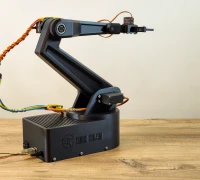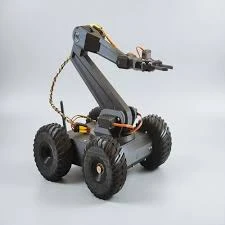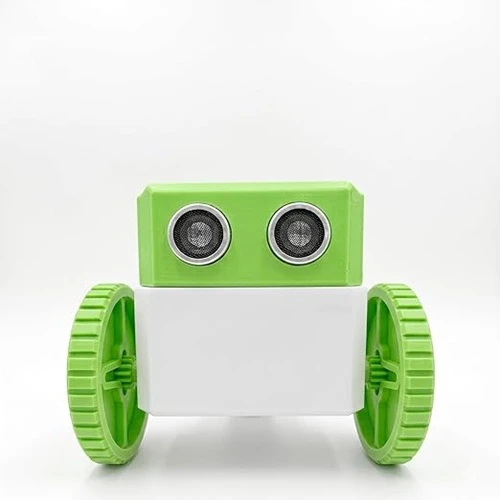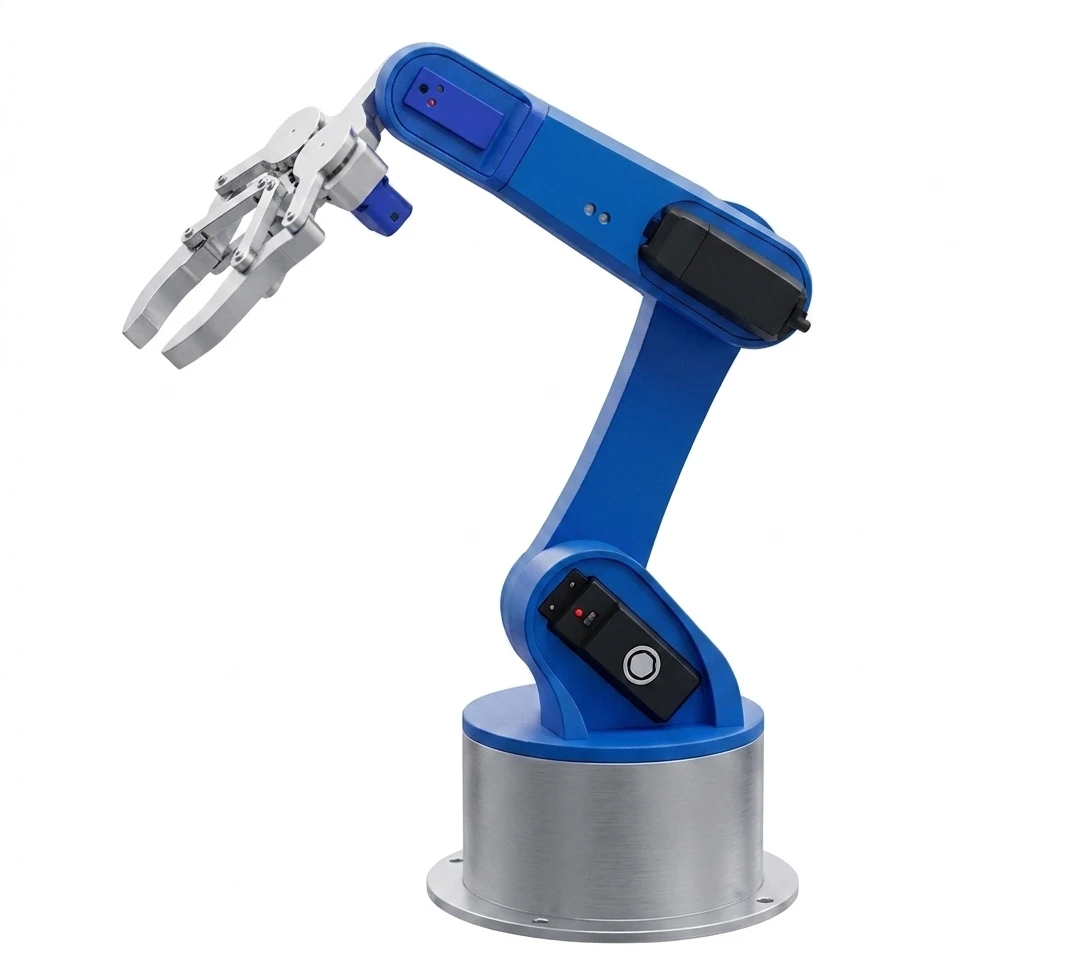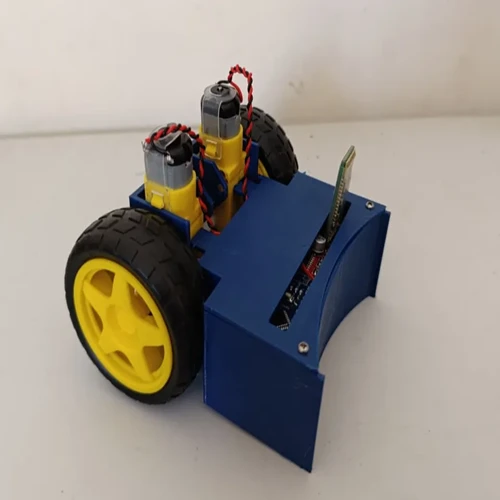
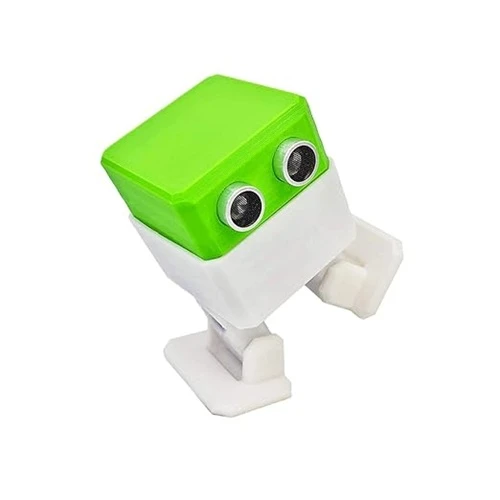
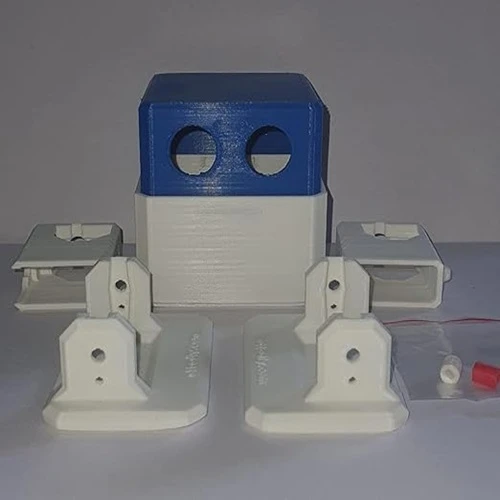
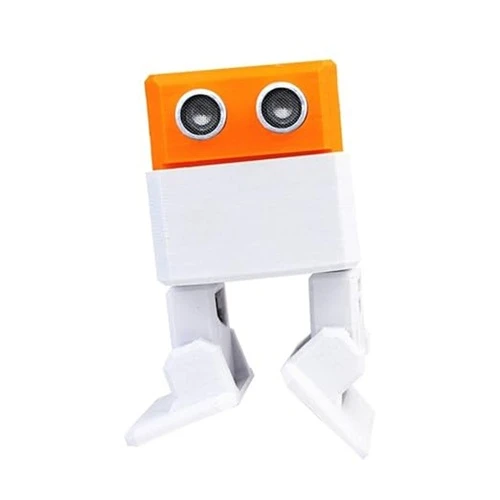
An open-source DIY walking robot kit designed for interactive robotics learning, Arduino programming, and STEM education. Modeled after the popular Otto DIY platform, this compact humanoid robot can walk, dance, tilt, and intelligently avoid obstacles using its ultrasonic "eyes," making it a highly engaging hands-on project for kids, students, and coding beginners.
Component List:-
- 1 × 3D-Printed/Molded Main Head/Body Enclosure Cover
- 1 × 3D-Printed/Molded Lower Torso/Base Plate
- 2 × 3D-Printed/Molded Leg Strut Connectors
- 2 × 3D-Printed/Molded Wide Stabilizing Foot Pedals
- 1 × HC-SR04 Ultrasonic Distance Sensor Module (Eyes)
- 4 × SG90 Micro Servo Motors (2 for the legs, 2 for the feet)
- 1 × Arduino Nano (or compatible mini microcontroller board)
- 1 × Arduino Nano I/O Expansion Shield Board (for easy servo plug connections)
- 1 × Mini Piezo Buzzer (for sound effects and melodies)
- 1 × 4AA Battery Holder (or 3.7V Li-ion battery setup with step-up converter)
- 1 Set × Female-to-Female Dupont Jumper Wires
- 1 × Mini Rocker Power Switch
- 1 Set × Assembly Hardware (Micro Screws and Servo Horn Attachments)
Features:-
- Interactive bipedal movement (walks, steps, turns, and performs dance routines)
- Autonomous obstacle avoidance utilizing a front-facing HC-SR04 ultrasonic sensor
- Distinctive 3D-printed modular chassis layout with an adjustable multi-axis leg design
- Fully compatible with Arduino IDE and scratch-based block coding platforms
- Equipped with micro servo motors for smooth, coordinated skeletal articulation
- Expandable architecture designed for adding buzzers, LEDs, or Bluetooth control
- Easy snap-together assembly ideal for makerspaces and beginner classrooms
Applications:-
- Introduction to bipedal robotics mechanics and inverse kinematics bases
- Interactive STEM coding workshops for schools and educational institutions
- Gamified programming practice (teaching robots how to dance, dodge, or race)
- Creative customization and 3D printing design experiments
- Entry-level humanoid AI modeling, science exhibitions, and DIY electronics clubs